
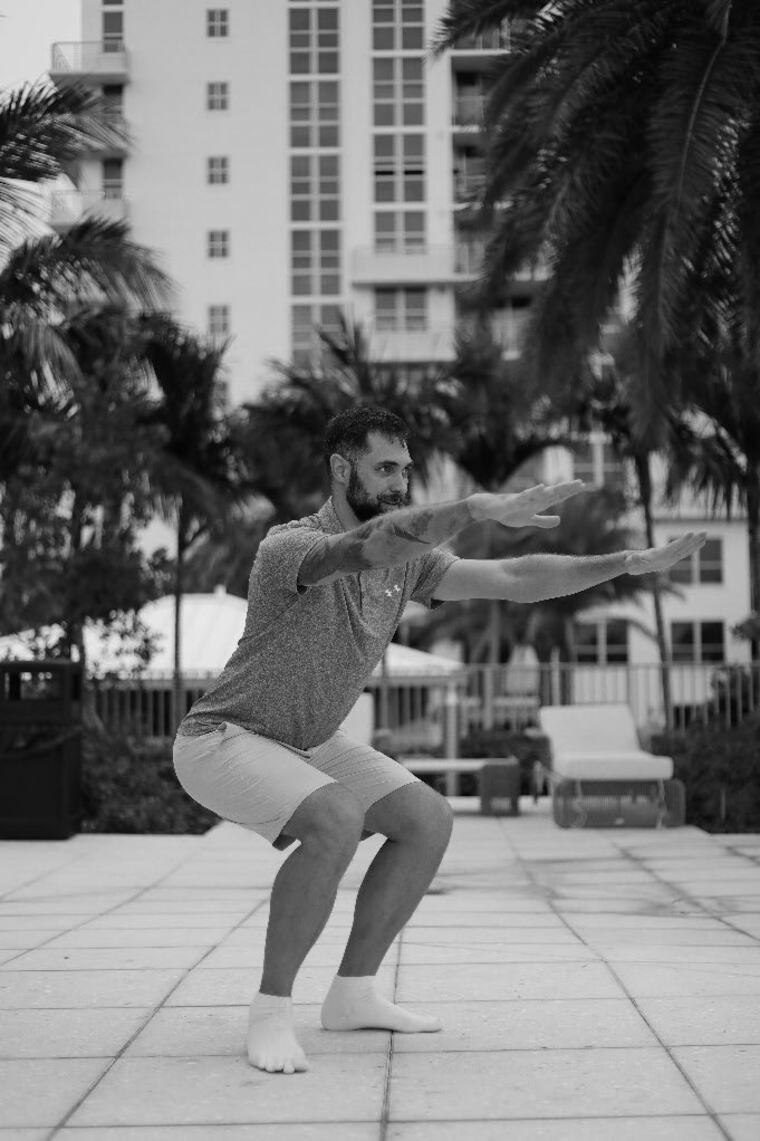
Phase 1: Classic technique, then eyes closed
The movement is learned on a stable floor until it is clean — then repeated with the eyes closed, guided only by the body’s own map.
Roll&Balance / Method
Classic exercises, performed with the eyes closed. Take vision away and the body has to rely on its own senses — that is the core of SensoryStrength Training, the method developed by Dmytro Bezpamiatnyi.
The core idea
The novelty of SST is simple to state: the familiar exercises — squats, lunges, hinges, single-leg stances — are done with the eyes closed.
Up to 80% of the sensory information the brain handles arrives through the eyes, so the brain gets used to steering movement by sight and quiets the other channels. With vision removed, the body can no longer orient itself to the horizon or watch itself move. It has to rely on its internal sense — proprioception: signals from muscle spindles, Golgi tendon organs and other receptors in muscles, tendons and fascia, together with the vestibular system and the skin of the feet.
That is the point of the training: it strengthens proprioceptive control instead of visual compensation. Hidden errors and asymmetries that the eyes used to correct come to the surface — and get fixed from the inside.
“Training with the eyes closed is not just a harder version of an exercise. It is a strategic step that takes the nervous system out of its comfort zone.”Conscious Movement, the SST book · p. 26
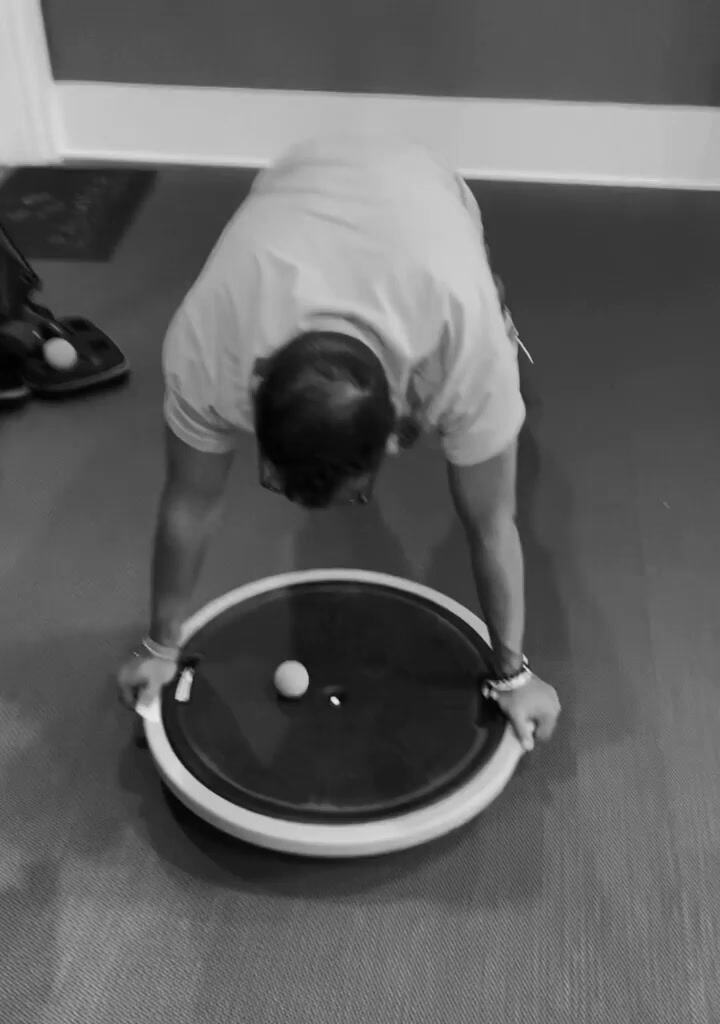
What happens
The easy, dominant visual channel is switched off on purpose. The brain loses its external reference.
Proprioceptive, vestibular and tactile signals become the main source of information — and the nervous system learns to read and trust them.
The brain learns to combine these channels into one reliable picture of where the body is, so balance no longer depends on a single source.
Neuroplasticity: “neurons that fire together, wire together.” Repeated, the new control becomes automatic and lasts after training stops.
“Sensory Strength Training is not just physical training. It is, first of all, training for the brain.”Conscious Movement, the SST book · p. 29
Five elements
Not an occasional drill but the central, mandatory tool — at every level, from the simplest exercise to the hardest.
How muscles are switched on, in what order and how precisely.
Diaphragmatic breathing and intra-abdominal pressure support the spine from inside and keep the mind calm under instability.
The body trained as connected lines, not isolated muscles.
Walking, squatting, hinging — perfected first, because every complex movement is built on them.
Each phase is a new challenge for the nervous system.
The movement is learned on a stable floor until it is clean — then repeated with the eyes closed, guided only by the body’s own map.
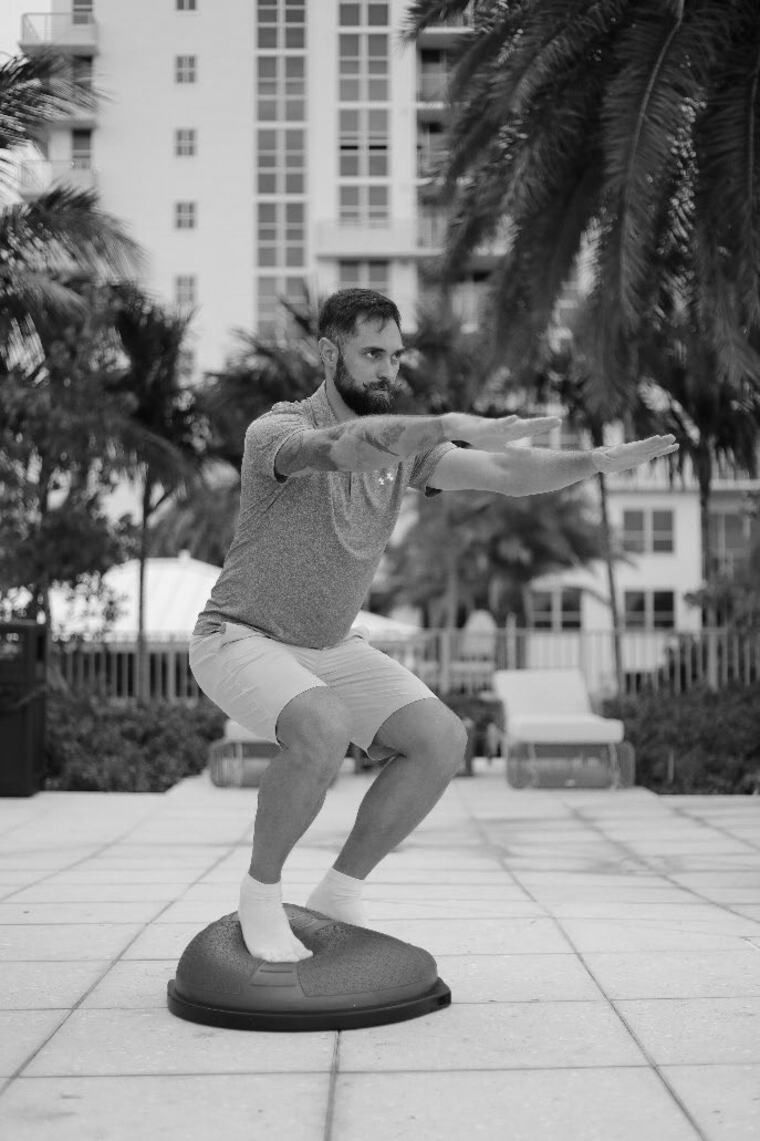
The same patterns on unstable support. The body reads every micro-shift of the base and the deep stabilisers switch on.
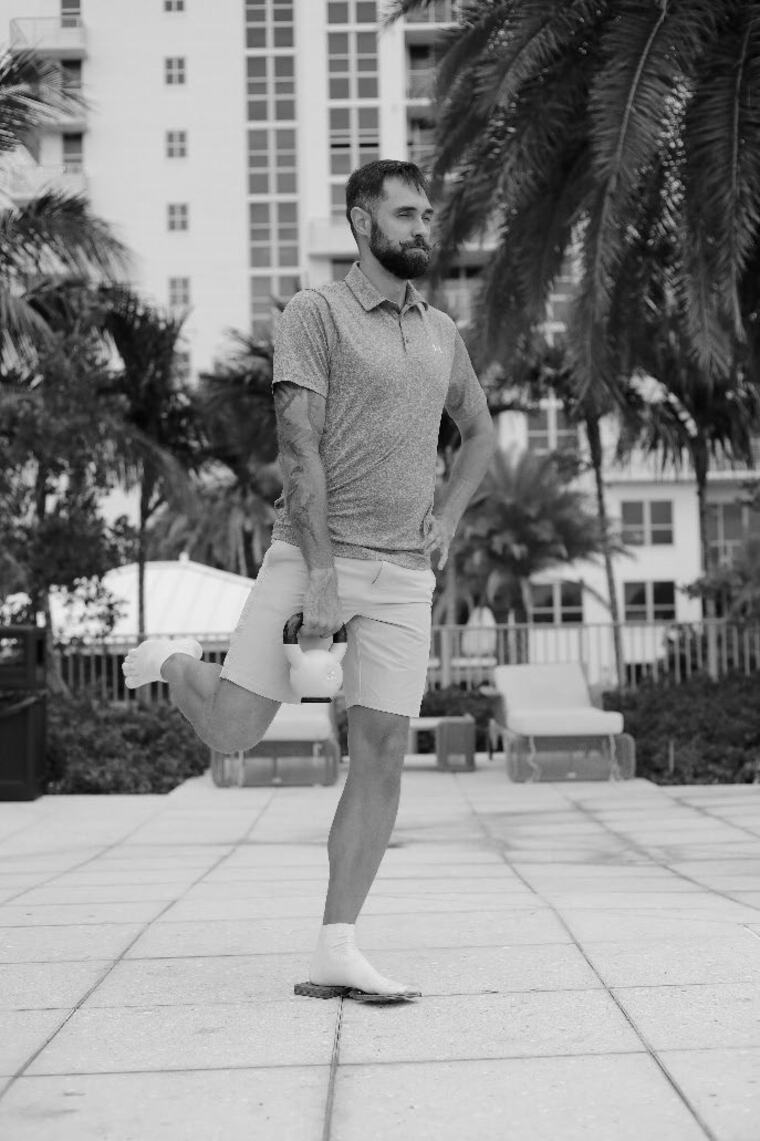
From two legs to one: a smaller base, uneven loads and the lateral hip stabilisers at work.
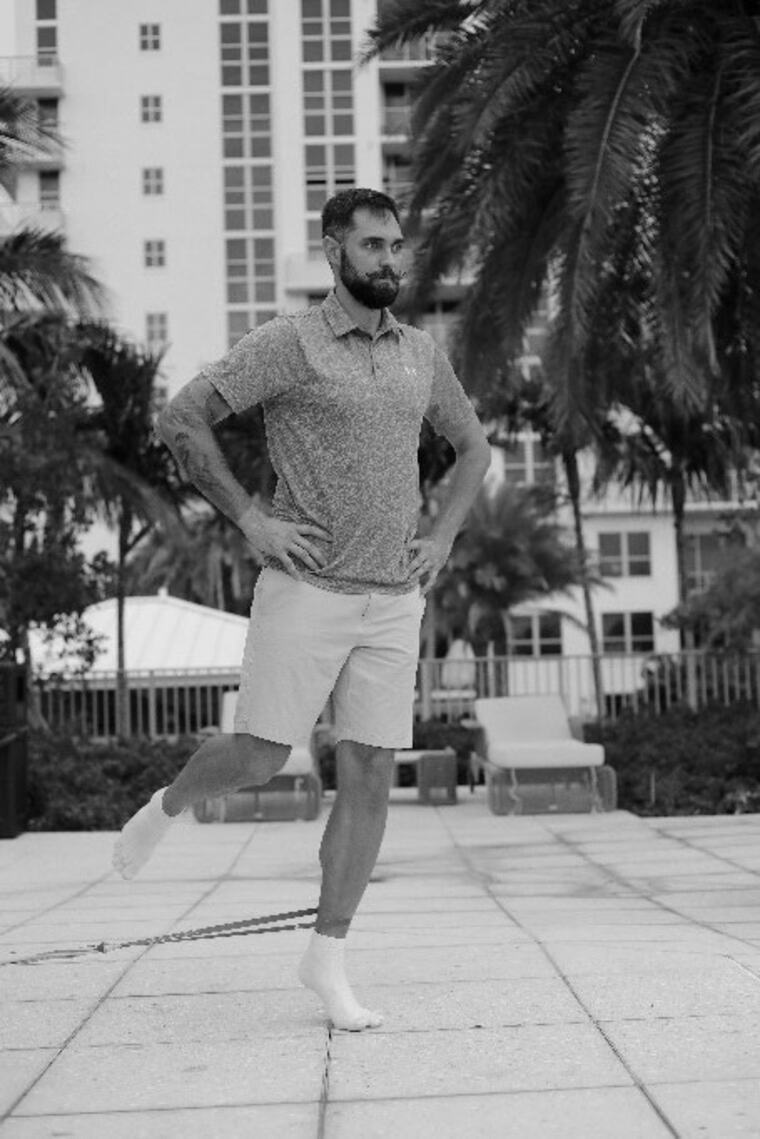
Bands, loads and unexpected pushes: control is kept while the body answers forces from outside — as in real life and sport.
Who it is for
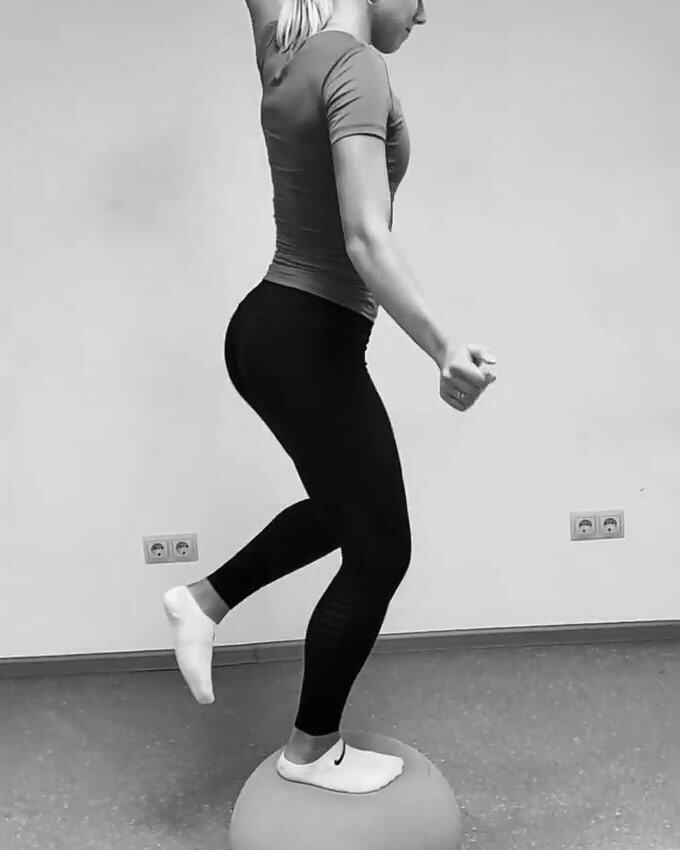
Sharper body awareness, cleaner technique and fewer re-injuries.
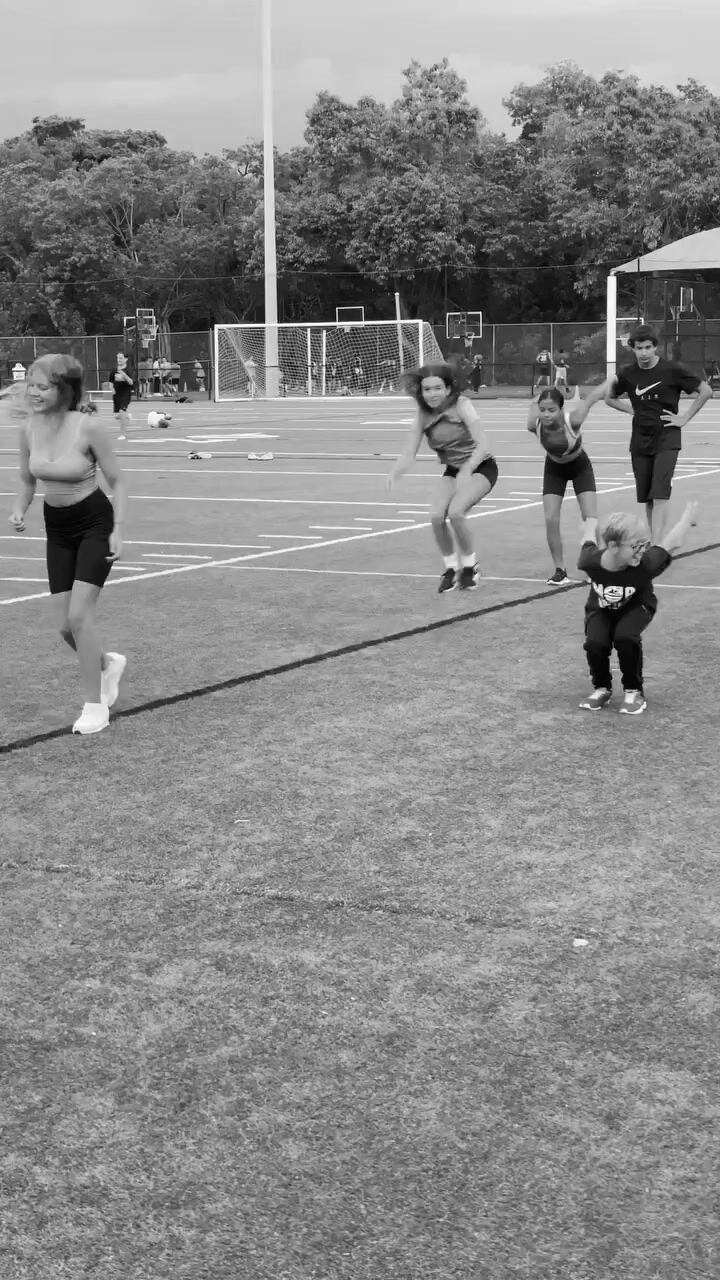
Correct movement patterns from the start — in a format that keeps them engaged.

Confidence, less fear of falling and a better quality of life. Fall-prevention programmes for 65+.
Principles
Progressive sensory load: just as strength training adds weight, SST step by step adds difficulty for the senses.
Evidence & record
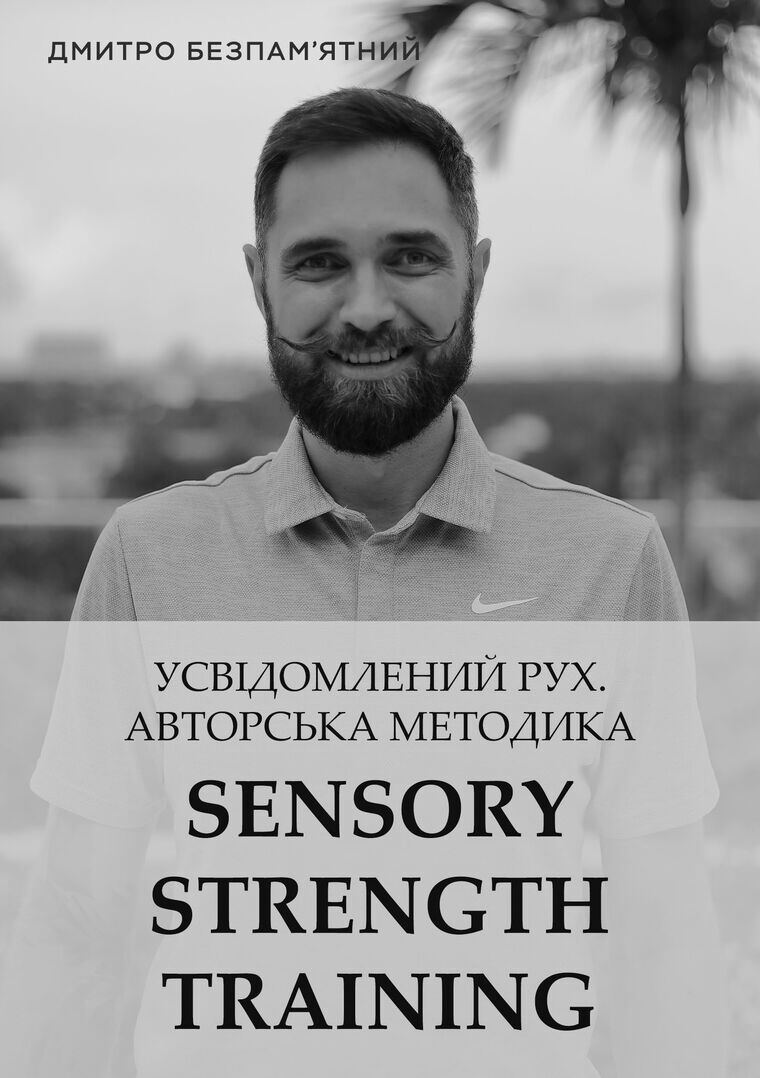
The method is described in Dmytro’s book Conscious Movement: The Author’s Methodology of Sensory Strength Training (SST) (Kyiv, 2025, 127 pp.) — six chapters, from proprioception, myofascial chains and eyes-closed training to the four phases, three exercise levels, programmes for older adults and athletes, and safety and progress monitoring. It is archived in national libraries and used as official curriculum at the National University of Pharmacy (Ukraine).
Contact
Tell Dmytro what you need. He will contact you to confirm the time and the plan. Nothing is paid online.